If somebody asks me which DVC resort is the hardest to buy and the hardest to book, the answer is the same both times: the Grand Californian. It's the only DVC property on the west coast, it's connected to Disneyland, and the inventory is so small that contracts barely hit the resale market. I've been selling DVC for 25 years and Grand Californian contracts still make me sit up straight when one comes across my desk. They're that scarce.
But scarcity alone doesn't make something a good purchase. The Grand Californian is expensive on resale, the dues are high, and the ROFR risk is real. So let me walk you through everything, from the room quality to the resale math, so you can decide whether this resort deserves its reputation and your money.
The Disneyland Connection Changes Everything
The Grand Californian Hotel and Spa sits between Disneyland Park and Disney California Adventure. Not near them. Between them. There is a private entrance from the hotel directly into Disney California Adventure. You walk out of the hotel, through a gate, and you're in the park. No parking structure, no tram, no security screening maze. Just a door and you're there.
Disneyland Park is a short walk through Downtown Disney. From the hotel lobby to the Disneyland gates is maybe five to seven minutes on foot. For families with young kids who need afternoon naps, this proximity is a revelation. You can be on a ride at noon, back in your room for a nap by 12:30, and heading back to the park by 3:00. Try doing that from an off-property hotel where the parking situation alone adds 30-40 minutes each way.
This location advantage is what drives the premium pricing. Disneyland doesn't have a monorail resort loop like Walt Disney World. There's no bus system connecting resort hotels to the parks. The Grand Californian's direct access makes it the most conveniently located hotel at the Disneyland Resort, period. That convenience has real value, and the market prices it accordingly.
Craftsman Architecture: The Best-Looking DVC Resort?
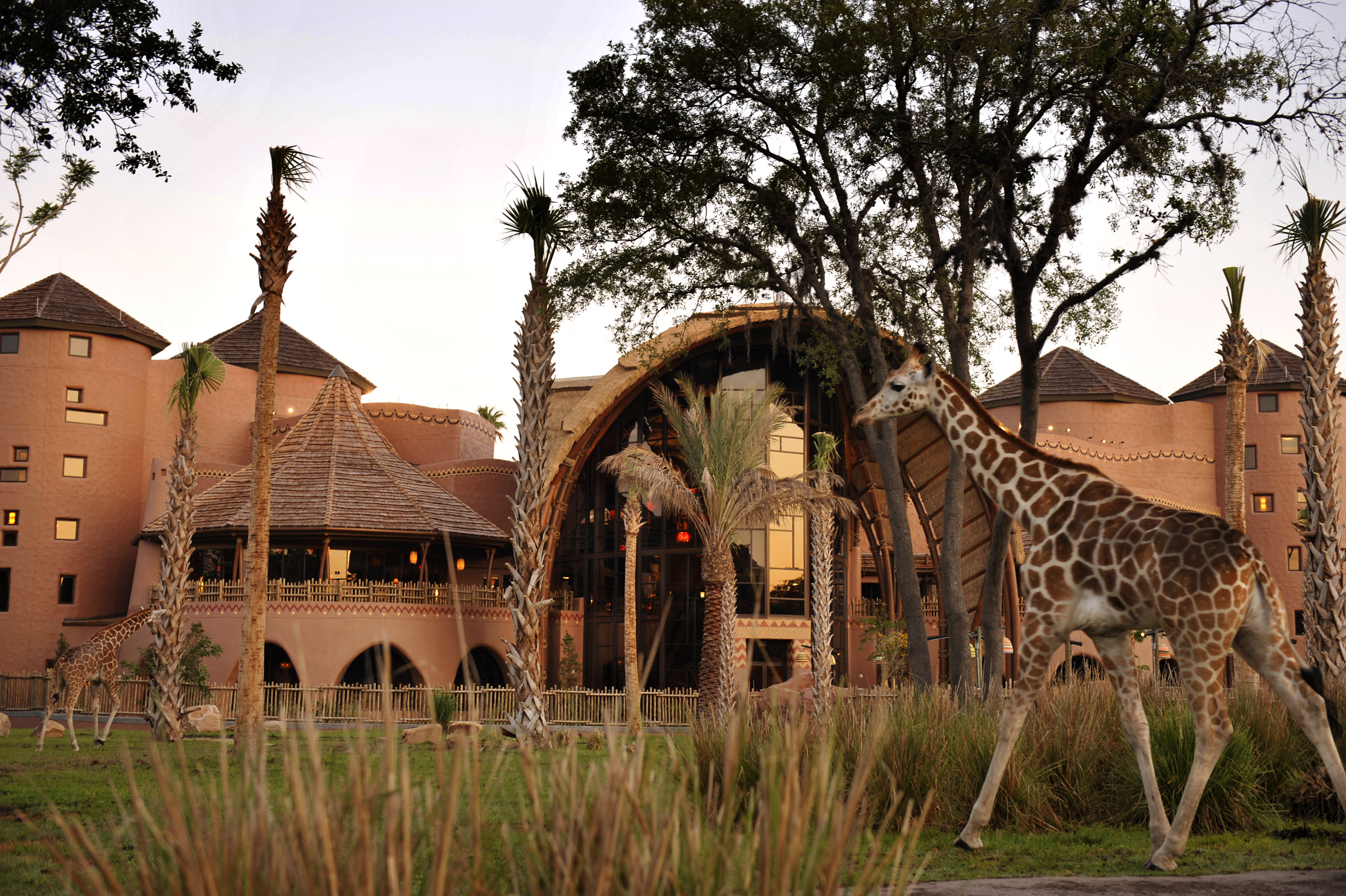
I've been in every DVC resort multiple times and the Grand Californian lobby is in my top two. The design references the American Craftsman movement, the same architectural tradition as the Gamble House in Pasadena and the work of Greene and Greene. Massive timber beams, stained glass, hand-crafted lighting fixtures, and warm earth tones throughout.
The lobby features a large stone hearth fireplace that serves as the social center of the hotel. In the evenings, a pianist plays in the lobby and families gather around the fireplace. The whole atmosphere is warm and inviting without being kitschy or overly themed. It feels like a grand California lodge that happens to be at Disneyland, not a theme park hotel trying to look like a lodge.
The exterior is equally impressive. The hotel wraps around a courtyard area with the Redwood Pool, which features a 90-foot waterslide built to look like it's emerging from a wooden structure. The landscaping includes California native plants and trees. At night, the hotel exterior is lit with warm amber lights that make the whole building glow. Walking up to the Grand Californian at night is genuinely beautiful.
The DVC Villas: Small Inventory, Big Demand
Here's what makes the Grand Californian different from every other DVC resort: the DVC villa inventory is tiny. The hotel has over 900 rooms total, but the DVC portion is limited to about 50 villas on a few dedicated floors. Compare that to a resort like Saratoga Springs, which has over 800 DVC units. The Grand Californian's DVC section is a fraction of what most resorts offer.
This small inventory creates a supply-and-demand situation that affects everything. Resale contracts are rare. When they appear, they sell quickly. Booking availability, especially during peak periods, is tight even at the 11-month home resort window. And Disney watches the resale market closely because they don't have a lot of Grand Californian points to go around.
Studios
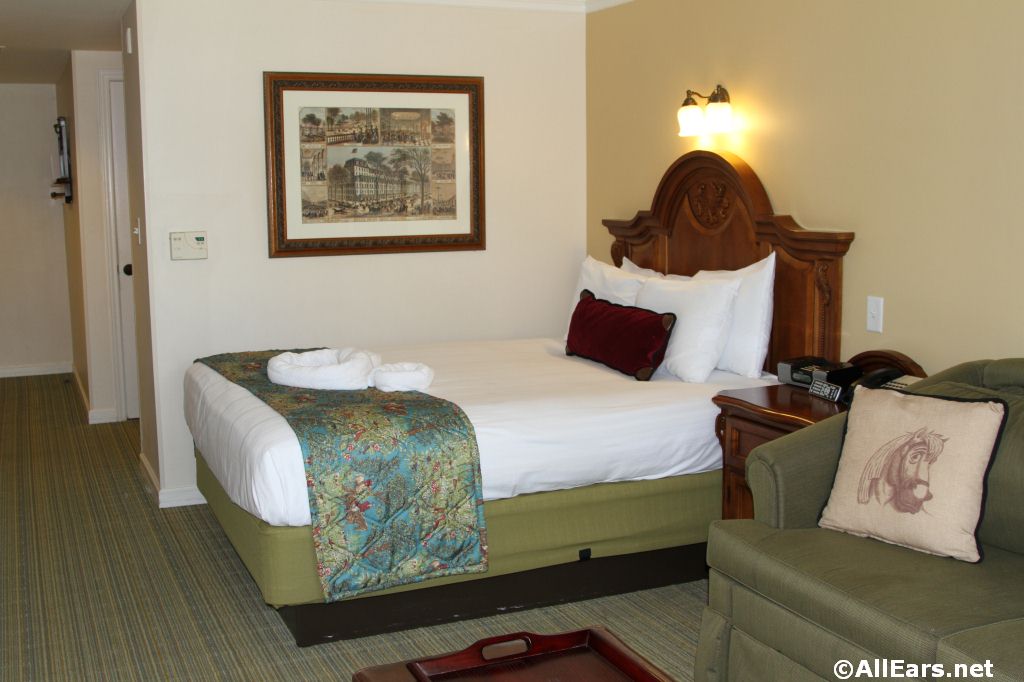
Studios at the Grand Californian DVC sleep five with a queen bed, a queen-size sleeper sofa, and a single pull-down. The rooms feature the Craftsman styling with warm wood tones, quality fixtures, and enough kitchenette equipment (mini fridge, microwave, coffee maker, toaster) to handle basic meals and snacks.
Point costs vary by season but expect 14-18 points per night during lower-demand periods and 22-30+ points during peak times like summer and holidays. A week in a studio during spring break could run 150-180 points.
One-Bedroom Villas
The one-bedroom villas offer a separate bedroom with a king bed, a full kitchen, a washer/dryer, and a living room with a queen sleeper sofa. They sleep five and provide the kind of space that makes a week-long stay comfortable. The full kitchen is valuable because dining at Disneyland Resort isn't cheap. Being able to make breakfast in your room saves $50+ per day for a family.
Two-Bedroom Villas
Two-bedrooms combine the one-bedroom with an attached studio for a unit that sleeps nine. Two full bathrooms, a full kitchen, and separate living and sleeping spaces. For multigenerational trips, these are ideal. Two grandparents, two parents, and two or three kids can all stay together comfortably.
Three-Bedroom Grand Villas
The grand villas sleep twelve with three bedrooms and three bathrooms. These are the rarest room type at an already rare DVC resort. Booking one requires significant points, early planning, and some luck. But for a large family gathering at Disneyland, there's nothing else like it.
Resale Market: Premium Pricing for a Reason
Grand Californian DVC contracts on the resale market typically trade between $150 and $175 per point. That makes it one of the most expensive DVC resorts on resale, rivaled only by the Grand Floridian and sometimes the Polynesian.
Why so expensive? Limited supply. When fewer than 50 villas exist, the corresponding point pool is small. Fewer points means fewer contracts on the resale market at any given time. When a Grand Californian contract hits the market at a fair price, it often receives multiple interested buyers within days. That demand pressure keeps prices elevated.
For a 150-point contract at $160 per point, you're looking at $24,000 before closing. Add the $500 Disney administration fee and $500-700 in closing costs and your total investment is approximately $25,000 to $25,200. Disney's direct price for the Grand Californian hovers around $270 per point, so a 150-point direct purchase would cost $40,500. The resale savings are significant in dollar terms but the per-point premium compared to other resale resorts is real.
Is that premium worth it? For west coast families who plan to visit Disneyland regularly, I'd argue yes. The convenience of the location and the quality of the resort justify the higher price if Disneyland is your primary Disney destination. For families who split time between Disneyland and Disney World, the math gets more complicated and you might be better served by a Florida resort where your points stretch further at the 7-month booking window.
Check our current resale listings to see if any Grand Californian contracts are available right now.
ROFR: Disney Is Watching
The Grand Californian has high ROFR activity. Disney exercises their right to buy back contracts here more aggressively than at most other resorts. The small inventory and high demand mean Disney has strong financial incentive to recapture these contracts and resell them at direct pricing.
What this means practically: don't try to steal one. A Grand Californian contract priced 15-20% below market is very likely to get taken back by Disney. You'll wait 30-45 days for the ROFR decision, get your deposit back, and be right where you started. Except now you've lost six weeks and the contract you wanted is gone.
Fair market offers in the $150-175 range have a reasonable chance of passing. The closer you are to the upper end of that range, the better your odds. I know that's not what bargain hunters want to hear, but I'd rather set honest expectations than have you waste time on offers that Disney will intercept. Our ROFR guide has current data on what's passing and what's getting taken back across all resorts.
Annual Dues: The West Coast Premium
Grand Californian annual dues are among the highest in the DVC system, currently running around $9.50-$10.00 per point. On a 150-point contract, that's approximately $1,425 to $1,500 per year. Only Aulani consistently costs more in annual dues.
The higher dues reflect the cost of maintaining a luxury hotel in Anaheim, California, where labor costs, property taxes, and insurance are all higher than Central Florida. California's regulatory environment adds costs that Florida properties don't face. These aren't arbitrary markups. They're real operational expenses that get passed through to owners.
Plan for 3-5% annual increases. In ten years, those dues might be $1,900 to $2,100 per year. Factor that trajectory into your ownership decision. Over a 20-year period, cumulative dues on 150 points could total $35,000 to $40,000+. Combined with the purchase price, your total 20-year cost of ownership runs $60,000 to $65,000. Divide that by 20 annual trips and you're at $3,000 to $3,250 per trip for a studio at the Grand Californian. That's a strong value compared to cash rates.
Compare dues across all DVC resorts at DVCHomeResort's comparison page to see the full picture.
Dining: Napa Rose and Beyond
The Grand Californian's dining portfolio is anchored by Napa Rose, which is legitimately one of the best restaurants at any Disney resort worldwide. This is not a theme park restaurant. It's a proper fine dining experience with a wine list focused on California vintages and a menu that changes seasonally. The tasting menu with wine pairings is exceptional. If you're a foodie, Napa Rose alone is a reason to stay at the Grand Californian.
Storytellers Cafe
Storytellers is the more family-oriented option with character breakfast and a dinner menu that leans toward California-inspired American cuisine. The character breakfast features Chip, Dale, and friends in frontier-themed outfits. It's popular with families and the food quality is above average for a character dining experience. Make reservations well in advance because it books up.
GCH Craftsman Bar
The lobby-level bar serves craft cocktails and a small menu of appetizers in a gorgeous Craftsman-styled setting. It's an adults' haven after a long park day. The cocktail program takes its California theme seriously with local spirits and seasonal ingredients. Grab a seat by the fireplace if you can.
White Water Snacks
The counter-service option handles breakfast, lunch, and dinner. Standard Disney counter-service quality but convenient for DVC owners who want a quick meal before heading to the parks. For studio owners with kitchenettes, White Water Snacks fills the gap when you don't want to cook but also don't want to sit down for a full meal.
Beyond the hotel, you have all of Downtown Disney within a five-minute walk. Restaurants like Trader Sam's Enchanted Tiki Bar, Tortilla Jo's, and Naples Ristorante give you additional options without getting in a car. The Disneyland Resort dining scene is smaller than Walt Disney World's, but the quality is consistently strong.
The Disneyland vs. Disney World Question
This is the big one. If you're considering the Grand Californian, you're implicitly choosing Disneyland over Disney World as your primary vacation destination. Or at least, you're choosing to prioritize it. That choice deserves careful thought.
Disneyland has two parks. Disney World has four. A week at Disneyland means you'll visit each park multiple times. A week at Disney World means you might not even get to everything once. For families who love deep immersion in one park and don't need constant variety, Disneyland's smaller scale is actually appealing. For families who want new experiences every day, Disney World's size is the advantage.
Disneyland's parks are better for young kids in some ways. The parks are more compact, walkable, and less physically exhausting than Disney World's sprawl. You can cross from Disneyland to California Adventure in five minutes. At Disney World, moving between parks involves buses, monorails, or boats and significant time investment.
Disneyland gets updates first. Galaxy's Edge opened at Disneyland before Hollywood Studios. Several attractions debut at Disneyland first. If being at the cutting edge of Disney park experiences matters to your family, there's an argument for Disneyland priority.
Disney World has more total offerings. Water parks, Disney Springs, more resort dining options, more room categories, and the sheer scale of the property provide variety that two parks in Anaheim can't match. For families who want a full week of non-repeating experiences, Disney World is hard to beat.
Many DVC owners solve this by owning points at both a Florida resort and the Grand Californian. A 100-point contract at the Grand Californian for annual or biannual Disneyland trips, plus a larger contract at a Florida resort for Disney World vacations. The points are interchangeable at the 7-month window, giving you maximum flexibility. But that dual-resort approach requires a larger total investment.
Who Should Buy Grand Californian?
In my experience, the happiest Grand Californian owners share these characteristics:
They live on the west coast. California, Oregon, Washington, Arizona, Nevada. If Disneyland is a reasonable drive or a short flight away, Grand Californian ownership lets you take weekend trips that would be impractical with Disney World. A family from San Diego can drive to Disneyland in two hours, stay in their DVC villa for the weekend, and be home Sunday night. That kind of accessibility transforms how you use DVC.
They love Disneyland specifically. Some Disney fans prefer Disneyland to Disney World. The original park has a charm and intimacy that the Florida property, for all its scale, doesn't replicate. If Disneyland holds a special place in your family's heart, owning at the Grand Californian makes that emotional connection a practical reality.
They value convenience above all else. Walking from your hotel room into Disney California Adventure is the most convenient park access in all of Disney. Nothing at Disney World, not even the Contemporary's walkway to Magic Kingdom, is this effortless. If minimizing travel time and maximizing park time is your priority, Grand Californian is the pinnacle.
They can afford the premium. At $150-175 per point on resale with $9.50-$10.00 per point in annual dues, Grand Californian is a premium product with premium pricing. Families who buy here aren't looking for the cheapest DVC option. They want a specific resort experience and they're willing to pay for it. And that's a perfectly valid buying philosophy.
Who Should Look at Other Options?
The Grand Californian isn't the right purchase if:
You live east of the Mississippi. Flying a family to Southern California every year is expensive. If you're already closer to Orlando, Florida DVC resorts give you more vacation for less total cost when you factor in transportation. The Grand Californian's purchase premium on top of higher airfare doesn't make financial sense for East Coast families who could drive to Disney World.
Budget is your primary concern. There are DVC resorts where $25,000 buys you 200+ points instead of 150. If maximizing your point count for the lowest possible price is the goal, Saratoga Springs, Old Key West, or Animal Kingdom Villas will serve you much better. The Grand Californian is not a value play.
You want booking flexibility. The small DVC inventory means your options are limited, especially at the 7-month window when non-home-resort booking opens. If you like the flexibility to book different DVC resorts depending on your mood, owning at a Florida resort with larger inventory gives you more choices. Grand Californian owners who try to book their home resort at 7 months are going to be disappointed more often than not.
You need multi-bedroom units regularly. With only about 50 DVC villas total, the number of one-bedroom, two-bedroom, and grand villa units is extremely small. Booking these larger room types requires precision timing at the 11-month window. If your family always needs a two-bedroom, the limited availability at Grand Californian could become frustrating year after year.
Booking Strategy: You Need a Plan
Because of the limited inventory, Grand Californian owners need to be more strategic about booking than owners at larger resorts. Here's what I tell my clients:
Book at exactly 11 months. Not 11 months and a few days. Not "sometime around 11 months." On the exact morning your booking window opens, be logged into the DVC website and ready to book. For popular dates like Christmas week, spring break, and summer weekends, rooms disappear within hours of the window opening. Learn how the home resort priority system works so you can time your bookings perfectly.
Be flexible on dates when possible. If you can shift your trip by a few days in either direction, your chances of getting the room type you want improve significantly. The difference between booking Wednesday-Sunday versus Friday-Tuesday can be the difference between getting your preferred villa and settling for whatever's left.
Plan your trips a year in advance. Because you need to book right at 11 months, you need to know your travel dates 11 months ahead. For families who like to plan spontaneously, this structured approach can feel restrictive. But it's the reality of owning at a high-demand, limited-inventory resort.
Consider midweek stays. If your schedule allows it, Tuesday through Saturday stays are often easier to book than traditional Friday through Sunday patterns. Other families are competing for the same weekend nights, so shifting your arrival day can open up availability. Understanding DVC booking windows gives you a real advantage here.
Comparing Grand Californian to Walt Disney World Options
I get asked to compare the Grand Californian to Florida DVC resorts constantly. Here's the honest comparison:
For the same $25,000 you'd spend on 150 Grand Californian points, you could buy approximately 175-190 points at the Polynesian, 180-190 points at Copper Creek, or 220-250 points at Saratoga Springs. More points means more nights, more room type options, and more flexibility. Florida DVC resorts also have lower annual dues in most cases.
But Florida resorts don't have a private entrance to Disneyland. They don't have Napa Rose. And they're 2,500 miles from the west coast. The comparison isn't just about points per dollar. It's about which vacation experience your family wants and which location serves your life.
For a side-by-side on current pricing across every resort, DVCHomeResort has an updated comparison that's worth checking before you make any decisions.
My Honest Assessment
The Grand Californian is the Rolex of DVC resorts. It's beautifully made, it commands a premium, and not everyone needs one. But for the right buyer, it delivers an ownership experience that nothing else in the DVC system can match.
If you're a west coast family that loves Disneyland, can handle the $150-175 per point resale price and $9.50-$10.00 per point annual dues, and you're disciplined about booking at the 11-month window, the Grand Californian will make you extremely happy. The resort quality is outstanding, the park access is unmatched, and the Craftsman architecture creates an atmosphere that makes every arrival feel special.
If you're on the fence, start by renting DVC points for a Grand Californian stay. Experience the resort firsthand. Walk through that private entrance into California Adventure. Have dinner at Napa Rose. Then decide if the ownership premium is worth it for your family. Nine times out of ten, families who do a test stay come back to me ready to buy.
Grand Californian contracts are rare on the resale market, but when they appear, you'll find them on our current listings page. If you want to be notified when one becomes available, call us. We'll put you on our watch list and reach out the moment a contract hits the market. With inventory this tight, being first in line matters. To compare current pricing and availability at this resort, visit DVCSales.com.